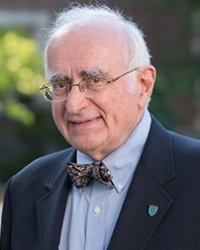
KWANG-SOO KIM, PHD
- Harvard title(s): Associate Professor of Psychiatry and Neuroscience
- McLean title(s): Directory, Molecular Neurobiology Laboratory
- Email: kskim@mclean.harvard.edu
- Telephone: (617) 855-2024
- Fax: (617) 855-3479
- Office Address: Molecular Neurobiology Laboratory
- Degree(s): 1977 B.Sc., 1979 M.S., and 1983 Ph.D.
- Clinical Interests: Neurological and psychiatric diseases in which catecholamine neurotransmitters are dysregulated.
- Bio:
Dr. Kim obtained a B.Sc. in Microbiology from Seoul National University, Korea. He then moved to Korea Advanced Institute of Science and Technology (Seoul, Korea) where he obtained a Master degree and Ph.D. in Microbial Genetics. In 1983 he joined the laboratory of Dr. L. Guarente at the Massachusetts Institute of Technology where he focused his attention on transcriptional control mechanisms. In 1989 he took the position of Assistant Professor in the Department of Neurology and Neuroscience at Cornell University Medical School. In 1994 he moved to the University of Tennessee College of Medicine where he acted as Associate Professor in the Department of Neurology and the Department of Anatomy and Neurobiology. He is now Director of the Molecular Neurobiology Laboratory, at McLean Hospital, Harvard Medical School since 1998.
Dr. Kim has received several awards including two times Independent Investigator awards from the National Alliance for Research on Schizophrenia and Depression (NARSAD). He is serving as a reviewer at NIH study sections and is currently an editorial board member of the Journal, Stem Cells.
- Publications:
- Kim, K.S. and Guarente, L. (1989) Mutations that Alter transcriptional Activation but not DNA Binding in the Zinc Finger of Yeast Activator HAPI. Nature 342, 200-203.
- Pfeifer, K., Kim, K.S., Kogan, S. and Guarente, L. (1989) Functional Dissection and Sequence of Yeast HAPI Activator, Cell 56, 291-301.
- Kim, K.S., Pfeifer, K., Powell, L. and Guarente, L. (1990) Internal Deletions in the Yeast Transcriptional Activator HAPI Have Opposite Effects at Two Sequence Elements. P.N.A.S. (USA) 87, 4524-4528.
- Kim, K.S., Park, D.H., Wessel, T.C., Song, B., Wagner, J.A., Joh, T.H. (1993) A dual role of the cAMP-dependent protein kinase on tyrosine hydroxylase gene expression. P.N.A.S. (USA) 90, 3471-3475.
- Kim, K.S., Ishiguro, H., Tinti, C., Wagner, J.A. and Joh, T.H. (1994) The cAMP-dependent protein kinase regulates transcription of the dopamine β-hydroxylase gene. J. Neurosci. 14, 7200-7207.
- Seo, H., Yang, C., Kim, H.-S., and Kim, K.S. (1996) Multiple protein factors interact with the cis-regulatory elements of the proximal promoter in a cell-specific manner and regulate transcription of the dopamine β-hydroxylase gene. J. Neurosci. 16, 4102-4112.
- Tinti, C., Yang, C.Y., Seo, H., Conti, B., Kim, C., Joh, T.H., and Kim, K.S. (1997) Structure/function relationship of the cAMP response element in TH gene transcription. J. Biol. Chem. 272, 19158-19164.
- Kim, H.S., Seo, H., Brunet, J.F., and Kim, K.S. (1998) Noradrenergic-specific transcription of the dopamine β-hydroxylase gene requires synergy of multiple cis-regulatory elements including at least two Phox2a-binding sites J. Neurosci. 18:8247-8260.
- Kim, C.H., Ardayfio, P., and Kim, K.S. (2001) An E-box motif residing in the exon/intron 1 junction regulates both transcriptional activation and splicing of the hNET gene. J. Biol. Chem. 276:24797-805.
- Hwang, D., Carlezon, W., Isacson, O., and Kim, K.S. (2001) A high-efficiency synthetic promoter that drives transgene expression selectively in noradrenergic neurons. Human Gene Ther. 12:1731-1740.
- Bjoklund, L., Chung, S., Andersson, T., Costantini, L.C., Kim, K.S., and Isacson, O. (2002) Transplanted embryonic stem cells differentiate into dopaminergic neurons in vivo and restore behavioral function in a Parkinson's disease model. P.N.A.S. (USA) 99:2344-9.
- Kim, C.H., Hwang, D.Y., Park, J.J., and Kim, K.S. (2002) A proximal promoter domain containing a homeodomain-binding core motif interacts with multiple transcription factors including HoxA5 and Phox2 proteins and critically regulate cell type-specific transcription of the hNET gene. J. Neurosci. 22(7):2579-89.
- Chung, S., Sonntag, K.-C., Andersson, T., Bjorklund, L.M., Park, J.J., Isacson, O., Kim, K.S. (2002) Genetic engineering of mouse embryonic stem cells by Nurr1 enhances differentiation and maturation into dopaminergic neurons. Eur. J. Neurosci. 16:1829-1838.
- Kim, K.S., Kim, C.H., Hwang, D.Y., Seo H., Chung, S., Hong, S.J., Anderson, T., and Isacson, O. (2003) The orphan nuclear receptor Nurr1 directly transactivates the promoter of the tyrosine hydroxylase gene in a cell-specific manner. J. Neurochem. 85(3):622-34.
- Hwang, D.-Y., Hwang, M.M., Kim, H.S., and Kim, K.S. (2005) Genetically engineered human dopamine β-hydroxylase gene promoters with better Phox2a-binding sites drive significantly enhanced transgene expression in a noradrenergic cell type-specific manner. Mol. Therapy 11:131-142.
- Chung, S., Hwang, M., Kim, D.W., Hedlund, E., Hwang, D.-Y., Kang, U.J., Isacson, O., Kim, K.S. (2005) The homeodomain transcription factor Pitx3 facilitates differentiation of mouse embryonic stem cells into A9-like DA neurons. Mol. Cell. Neurosci. 28:241-252.
- Hwang, D.Y., Fleming, S.M., Ardayfio, P., Moran-Gates, T, Kim, H, Tarazi, F.I., Chesselet, M.-F., and Kim, K.S. (2005) 3,4-dihydroxyphenylalanine reverses the motor deficits in Pitx3-deficient aphakia mice: behavioral characterization of a novel genetic model of Parkinson's disease. J. Neurosci. 25:2132-2137.